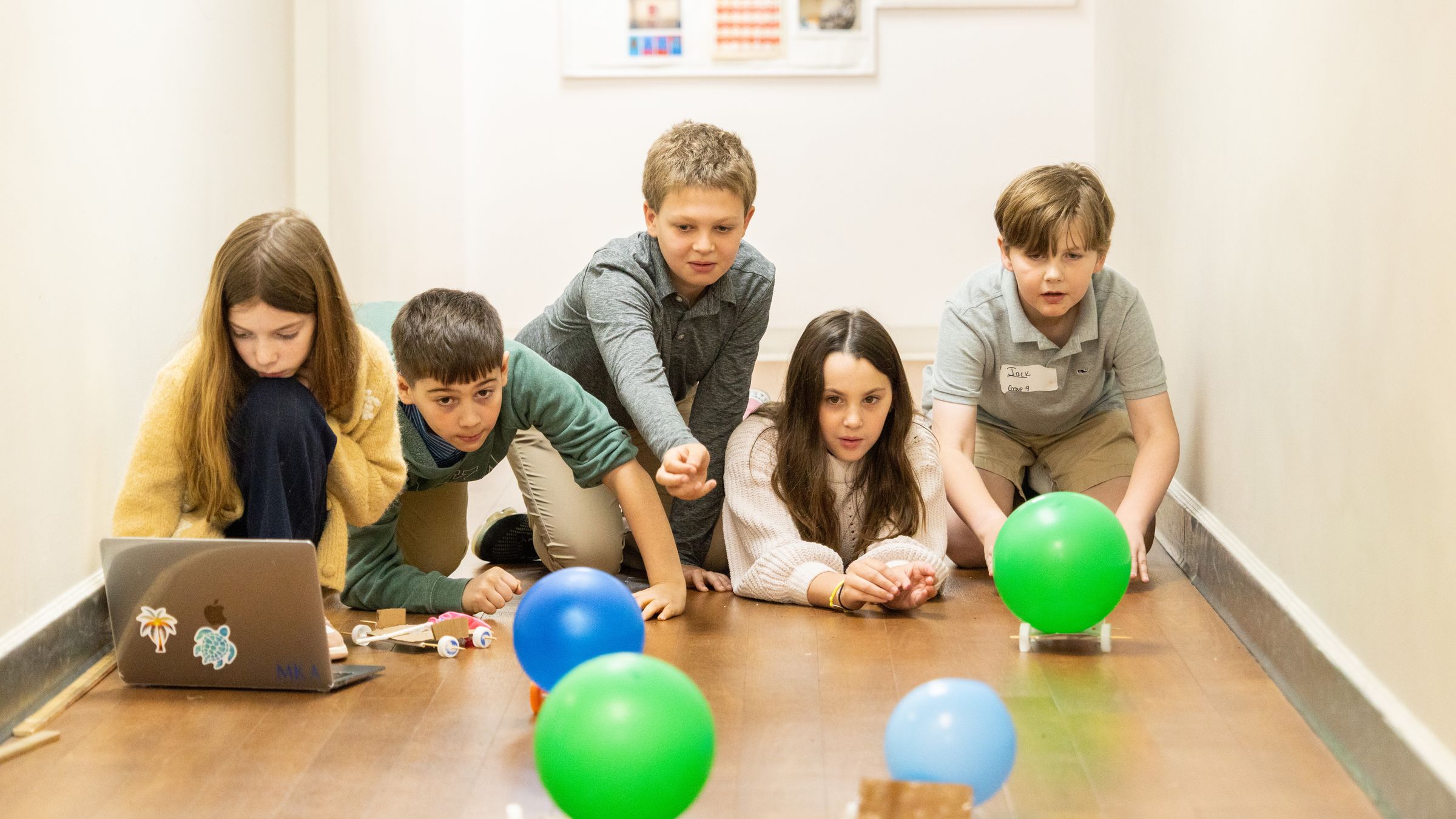
At a time when children are deeply curious, willing to take academic risks, and are developing a profound understanding of the world around them, Middle School at MKA provides a thoughtful and intentional transition. Guided by faculty who are designers and facilitators in their students’ growth and share their desire to grow, middle schoolers advance academically, socially, and emotionally.
Grades 4-8
Transforming Through Connection
By engaging students’ intellectual curiosity and enthusiasm for learning in an innovative, engaging, and challenging academic program, faculty help students to become self-reliant learners who strive for academic excellence. A school-wide focus on developing positive social and emotional skills is essential to students' understanding themselves and to their success as learners.
LEARNING AT THE GROWING EDGE
Middle school years are a time of discovery, growth, and increasing independence. The following fourth-grade through eighth-grade examples, representative of MKA’s dynamic academic program, illustrate hallmarks of MKA’s Jr-K–12 student experience.
Throughout their Middle School years, students intentionally develop habits of inquiry and reflection as the building blocks of their moral and intellectual character. They engage with a curriculum and in an environment that reinforces the meaning and importance of MKA’s Character Standards, and students apply their understanding of them to everyday decisions and their engagement in community life.
Middle School students build strong research skills through meaningful projects that foster increasing collaboration and independence in the research process. For example, fourth-grade students practice guided note-taking as they study Native American tribes and create exhibits. Students in eighth grade formulate their own essential questions to guide their research of an aspect of Colonial Williamsburg. They explore primary and secondary sources in the classroom and library and through on-site interviews in Colonial Williamsburg.
The Eighth Grade Science Project, for example, showcases the STEM+ skills that students have developed throughout their years at the Middle School. Through this independent, student-driven research, students organically tap into their learning from multiple disciplines as they design, experiment, and engineer solutions that reflect real-world scientific insight.
Middle School students build their skills through meaningful writing assignments across a variety of genres—from personal narrative to the persuasive essay. Writing is taught as a process, and students learn to draft, reflect, revise, and edit their work to enhance the impact of their communication. Students write often and reflect on copious feedback they receive to guide their revision and refinement of their writing. For example, sixth-grade students write on activism when they read the novel, The Watsons Go to Birmingham–1963.
Building confidence and gaining experience across the fine and performing arts are essential foundations of the Middle School learning experience. Students learn about the arts not only on the stage and in the studio but also through interdisciplinary exploration. For example, every seventh-grade student studies a Shakespeare play in English class, where they practice using and interpreting Shakespeare’s language and explore a play’s themes in depth. In partnership with the Shakespeare Theatre of New Jersey, all students work through scenes with professional actors. Our seventh-grade Theatre Arts Shakespeare Production class performs an adaptation of the play they read.
Across the curriculum and through their Middle School years, students learn to be respectful of and empathetic toward others and their experiences. They are frequently encouraged to collaborate to achieve a common goal and promote positive change in their local and global communities. Through Project Citizen, eighth-grade history students begin to see themselves as changemakers by identifying local issues and proposing real policy solutions. They examine complex issues and take meaningful action, foundations for becoming engaged global citizens.
By intentionally developing skills related to social-emotional learning (SEL) and a robust wellness curriculum, Middle School students build the self-awareness, empathy, and character needed to form positive relationships and make responsible decisions. In fourth grade, for example, students implement strategies and techniques to strengthen their confidence and self-worth. Utilizing tools like the Wellness Wheel, students reflect on the seven dimensions of wellness and learn how to develop healthy habits, prioritize balance, and bring a deeper sense of purpose and care into their daily lives.
WHAT LEARNING LOOKS LIKE
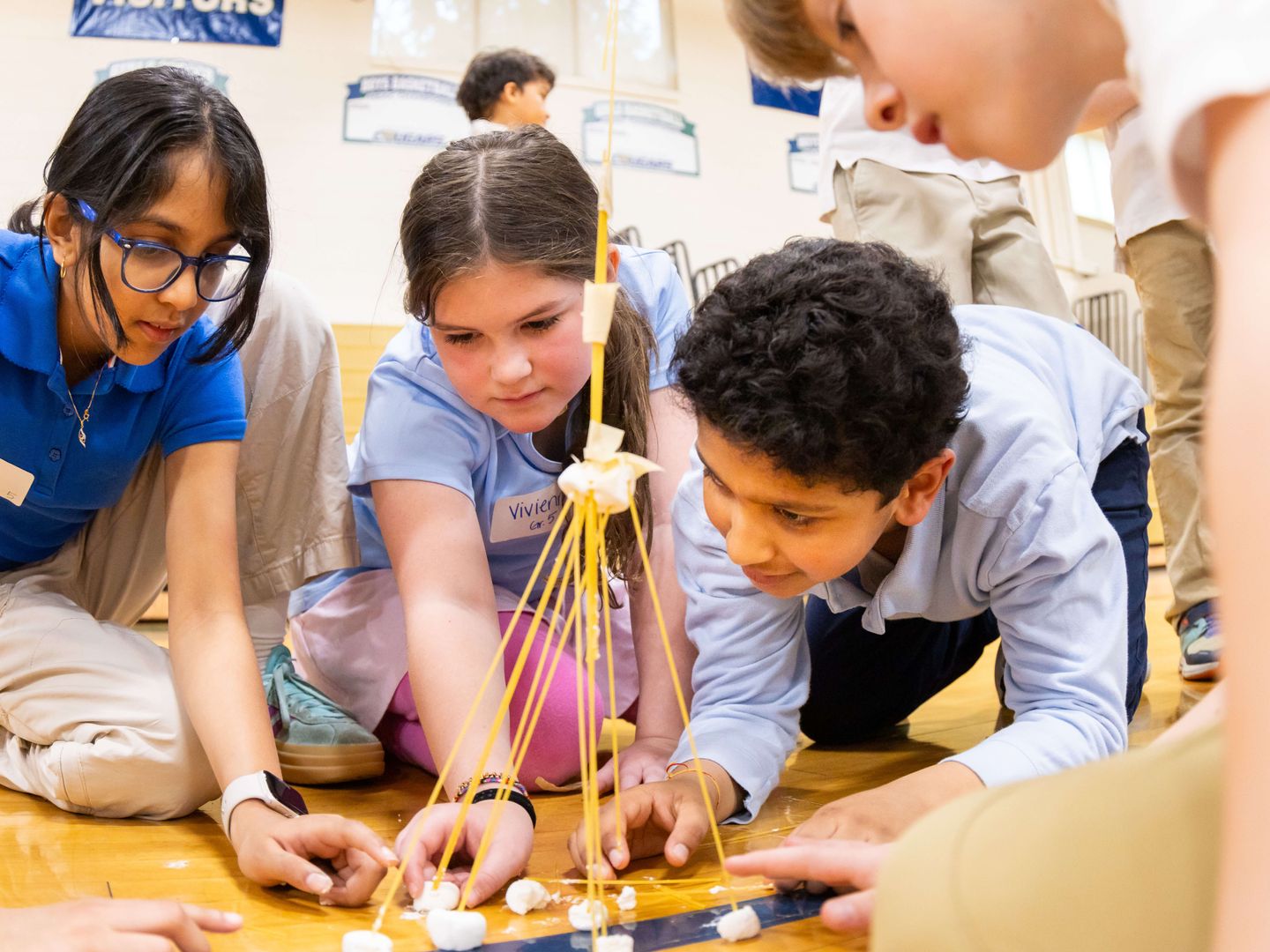
With a focus on inquiry, creativity, and hands-on learning, Middle School students engage in varied learning experiences and purposeful collaboration to expand their knowledge, leverage their voices, and make connections to the world around them. Learning is active, connected, and supported by a network of trusted adults who know and celebrate each student. Across all disciplines, teachers provide frequent feedback and consistently encourage students to revise their thinking, not just edit their work.
Middle School faculty are dedicated to and embrace the joys of teaching middle-school-aged students. To foster growth and independence, teachers provide students with challenge, guidance, and support to become reflective humans, skillful communicators and collaborators, and lifelong learners who have both the knowledge and intellectual and social skills to be agents of change.
Teachers build close partnerships with their students not only through class and advisor interactions but also through small-group and individual work during Collaborative Work Period, recess, and activities after school.
The daily schedule provides age-appropriate opportunities for innovative teaching and meaningful learning. All Middle School students enjoy two outside recesses daily, which research has indicated are essential not only to health but also to effective learning. Every day, students have opportunities to meet and work with teachers or peers, or independently, during a morning Academic Engagement Period.
Lower House students (grades 4 and 5) follow a modified elementary school model in which they learn and travel to most classes with their advisor groups. Lower House students eat lunch together during their own dedicated lunch period. Upper House students (grades 6–8) move throughout the school according to an individualized 8-day schedule.
All students engage in core academic courses that include English, social studies/history, math, science, world language (Chinese, French, or Spanish), fine and performing arts (dance, music, theater arts, media arts, and visual arts), physical education, and health. Students may also explore and extend their interests by participating in a variety of school-day activities, such as advanced music groups (Advanced Strings, Jazz Band, and Chamber Singers), Student Government, robotics, coding, Student Ed Tech Leaders, and Green Group.
Upper House students can also join a wide array of interscholastic team sports.
The Middle School advisory program guarantees that every child has at least one adult at school who knows them well and serves as both advisor and advocate. Middle School students begin their day in advisory where they connect with faculty advisors and can get academic advice. To succeed, students must feel connected to a community that values who they are. This sense of belonging, grounded in advisory, extends to all aspects of school life.
During dedicated advisor periods, Middle School students engage in a curriculum intentionally designed to help them build the social and emotional skills they need to be productive students and members of the MKA community. These skills include understanding their own emotions, relating to others, seeing and valuing different perspectives, conveying empathy, and communicating effectively. Students learn and practice these skills regularly so they can better understand themselves, develop meaningful relationships, and contribute to their communities as confident lifelong learners and change agents.
Middle School at MKA is where confidence takes root and character is shaped. In a community that values kindness and courage, our students begin to lead with open minds, growing hearts, and a vision for a future they can inspire.Carlaina Bell, Ed.D.Head of Middle School
Facility Feature
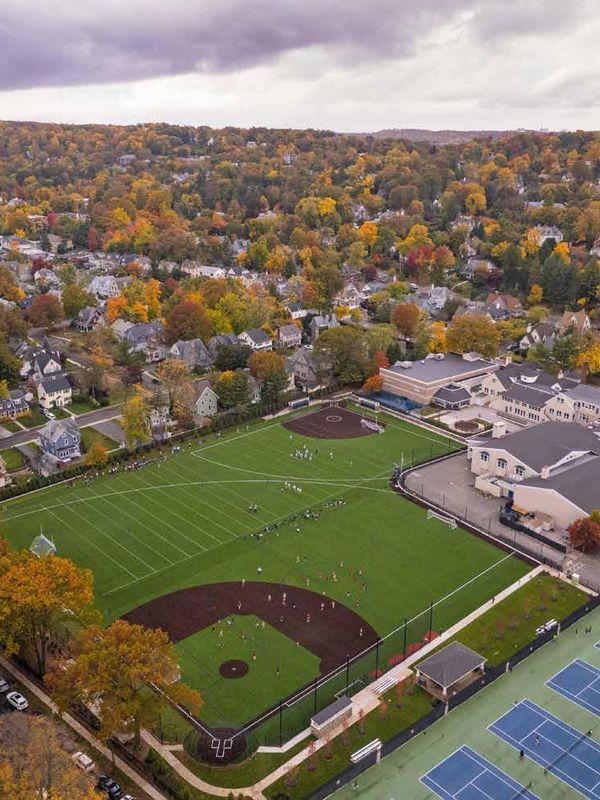
Middle School Fields Complex
The school’s largest and most versatile outdoor facility. The 3.45-acre complex enhances both academic and athletic programs, emphasizing teamwork, resilience, innovation, and balance as essential parts of learning. FLEX offerings provide opportunities for students to explore interests, collaborate, and recharge.